
|
(March 2, 1950, Flaminzeni, Singerei district, Republic of Moldova) Chemist, scientific area: physical chemistry, ecological chemistry,
|
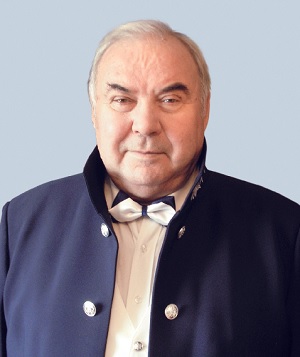 |
He graduated from the secondary school in Flamanzeni (1957–1967), and subsequently from the Faculty of Chemistry of the Moldova State University (1967–1972). Gifted with an innate talent for research, remarkable analytical abilities, and an exceptional work capacity, after military service (1972–1974), he pursued doctoral studies at the Institute of Water Chemistry and Colloid Chemistry of the National Academy of Sciences of Ukraine (1974–1977). He defended his PhD thesis in chemical sciences in 1981 and his Doctor Habilitat thesis in 2000.
Professor Tudor Lupașcu has carried out an outstanding scientific activity for 50 years at the Institute of Chemistry, advancing through all stages of academic and managerial career: research professor (2006), corresponding member (2012), and full member of ASM (2017), as well as head of laboratory (1990–2002), deputy director for scientific activity (1995–2001), head of the Center for Ecological Chemistry and Environmental Protection (2016–2023), and director of the Institute of Chemistry (2001–2018).
Academician Tudor Lupașcu founded a scientific school in the field of synthesis of carbonaceous adsorbents and the study of mechanisms for immobilization of organic and inorganic pollutants on solid supports, which he developed with dedication. Aware that a country’s economic strength depends on its natural resources, and given that the Republic of Moldova lacks significant mineral resources, he pioneered a novel research direction in national science—valorization of by-products from agricultural processing. In this context, he conducted in-depth studies of chemical and physicochemical processes, determining the mechanisms of transformation of lignocellulosic materials into activated carbons—valuable products for various sectors of the national economy, especially environmental and human health protection.
His fundamental research resulted in the development and patenting of new methods for obtaining a wide range of carbon adsorbents from walnut shells, peach, plum and apricot pits, and grape seeds. Based on the synthesized activated carbons, the enterosorbent Medicas-E and the hemosorbent Medicas-H were developed for detoxification of the human body. These activated carbons were also tested as adsorbents for immobilization of toxic substances from surface waters and as catalytic supports for oxidation of pollutants in groundwater. Technologies for drinking water treatment of the Dniester River, as well as methods for removal of hydrogen sulfide and nitrites from groundwater, were also developed.
As the ultimate goal of research is its practical implementation, the technology for producing activated carbons from local raw materials developed by Academician Tudor Lupașcu was implemented at the company “Ecosorbent” LLC in Ștefan Vodă, with an annual production capacity of 110–120 tons.
Professor Tudor Lupașcu also developed an innovative method for hydrosolubilization of natural tannins obtained from grape seeds. This led to the creation of a chemical compound named Enoxil, proven to be non-toxic and possessing strong antioxidant, antibacterial, and antifungal properties. Preclinical studies conducted in collaboration with specialists from the State University of Medicine and Pharmacy “Nicolae Testemițanu” and the Institute of Microbiology and Biotechnology demonstrated that medicinal products based on Enoxil can be used to treat human diseases caused by bacteria and fungi. Notably, pharmaceutical products based on Enoxil were produced by “Farmaco” JSC and tested in four national clinics in Chișinau. These preparations showed high therapeutic efficiency in treating bacterial and fungal infections, wound healing (thermal, physical, and chemical), postoperative wounds, post-radiation lesions in oncology patients, as well as traumatic soft tissue injuries and inflammatory conditions of the maxillofacial region in children. Promising results were also obtained in the use of Enoxil-based products for combating root rot in crops such as sugar beet, winter wheat, and soybean.
Another original research direction explored by Academician Tudor Lupașcu is the development of new construction materials based on local raw materials. Under his leadership, new compositions for interior and exterior plastering were developed and widely implemented in the Republic of Moldova and other former Soviet states, generating significant economic benefits—approximately 2 million lei for a single construction enterprise.
The scope and importance of the research conducted by his team are reflected in 23 international research and development projects carried out in collaboration with scientists from Romania, Russia, Ukraine, Belarus, Kazakhstan, Armenia, Norway, the United Kingdom, France, Spain, Germany, Austria, Switzerland, Italy, Portugal, Poland, Greece, Hungary, Slovakia, Turkey, the USA, and others.
His scientific output includes around 300 scientific articles, 77 patents, and numerous other contributions, totaling approximately 800 significant works.
For 17 years, he served as director of the Institute of Chemistry, a demanding yet highly impactful role. During this period, the Institute flourished due to achievements in both theoretical and applied research. Thanks to his efforts, the technical and material base of the Institute was significantly strengthened and modernized.
He actively supported and promoted young researchers, contributing to the training of national specialists in physical and environmental chemistry, generously sharing his knowledge and experience with students and early-career scientists. He served as professor at the Faculty of Chemistry and Chemical Technology of the Moldova State University and supervised three Doctor Habilitate theses and eight PhD theses in chemistry.
His scientific achievements have received wide recognition. He is a laureate of the State Prize in Science, Technology and Production (1996), Honored Scientist of the Republic of Moldova (2000), laureate of the Presidents’ Prize of the Academies of Sciences of Ukraine, Belarus, and Moldova (2000), and twice laureate of the ASM Prize (2000, 2009). He was awarded the WIPO Gold Medal (2009), the “Leonardo da Vinci” Order (2009), the “Gloria Muncii” Order (2010), the “Dimitrie Cantemir” Medal (2010), the “Nicolae Testemițanu” Medal (2010), and the “Aurel Vlaicu” Order (2011). In 2009 and 2012, he ranked first in the Top of Innovations; in 2015, he received the Government Prize “Best Inventor of the Year”; in 2016 – “Scientist of the Year”; in 2017 – the Medal “For Outstanding Merit in Environmental Protection.” In 2019, he was awarded the highest state distinction – the “Order of the Republic.”
References
- Editori red. șt.: Constantin Manolachi; coord. Aculina Arîcu; resp. ed. Ion Xenofontov. Academician Tudor LUPAȘCU. Bibliografie. Biblioteca științifică (Institut) ”Andrei Lupan”, Chișinău12020, F.E.P ”Tipografia Centrală”, 492 pag. ISBN 978-9975-3331-4-6.
- Lupaşcu, Tudor; Duca, Gheorghe; Goncear, Veaceslav. Enoxil – preparat ecologic pentru sănatatea omului. Ch.: S.n., 2012 (Tipogr. AŞM), 2011, 256 p. ISBN 978-9975-62-304-9.
- Lupaşcu, Tudor; Duca, Gheorghe; Lupaşcu, Galina. Enoxil-preparat ecologic pentru protecţia plantelor. Tipografia AŞM Chişinău, 2010, 144 p. ISBN 978-9975-62-274-5.
- Red. şt. dr. Arîcu, A. Cercetător şi manager de prestigiu: profesorul Tudor Lupaşcu la 60 de ani. Volum omagial. Tipografia AŞM Chişinău 2010, 296 p. ISBN 978-9975-9690-4-8.
- Lupaşcu, T. Cărbuni activi din materii prime vegetale. Chişinău, Ştiinţa, 2004, 224 p.
- Certificat de înregistrare a mărcii ENOXIL, nr. 19791 din 2010.
- Academia de Științe a Moldovei. Academicieni și membri corespondenți. Duca Gh. (coord.), Chișinău, 2015, 192 p.
- Vlad, P. Ed. The Institute of Chemistry of the AS MSSR (1959-1984 years). Stiinta: Chisinau, 1987, 145 p. (in Russian).
- Aricu A., Nastas R., Cocu M. The Institute of Chemistry at 60 years anniversary. Brief history, achievements and perspectives. Chemistry Journal of Moldova, 2019, 14(1), p. 8-31. doi: http://dx.doi.org/10.19261/cjm.2019.349.
https://voceabasarabiei.md/emisiuni-radio/item/21065-puncte-de-reflectie-cu-natalia-hadarca-18-01-2021-invitat-academicianul-tudor-lupascu
https://tribuna.md/2021/03/02/doi-academicieni-care-invata-din-trecut-implementeaza-in-prezent-si-privesc-in-viitor/